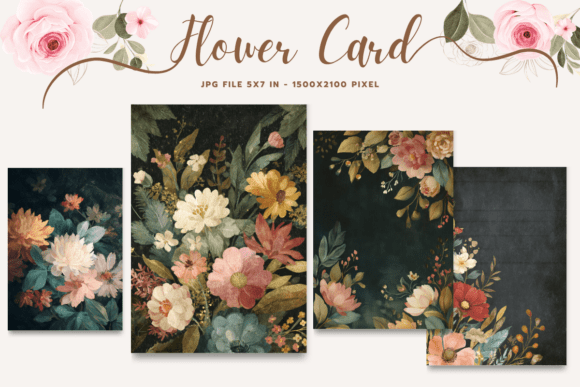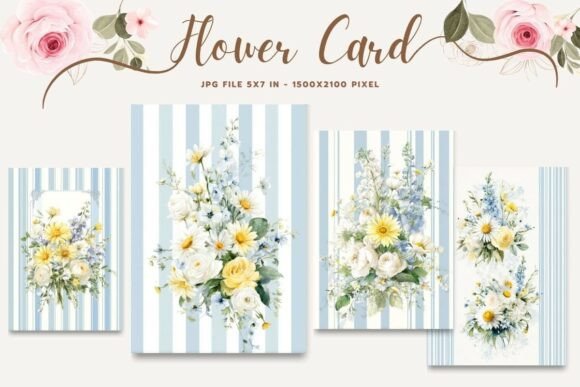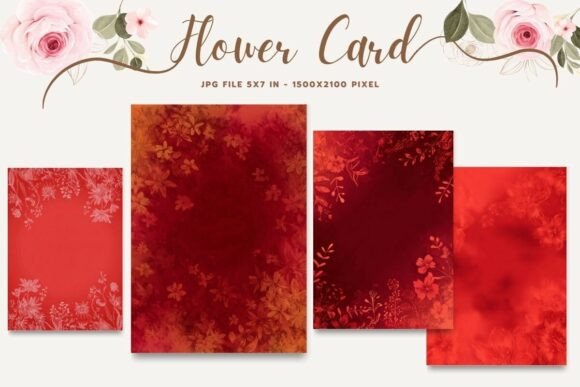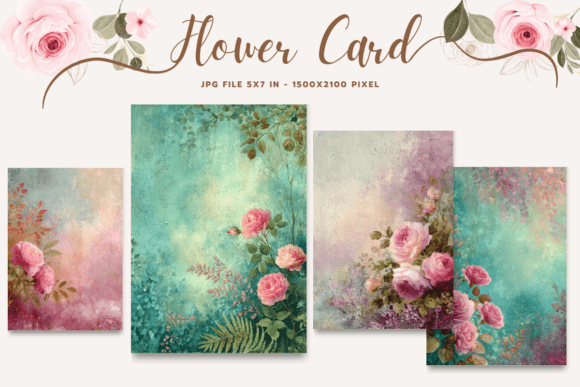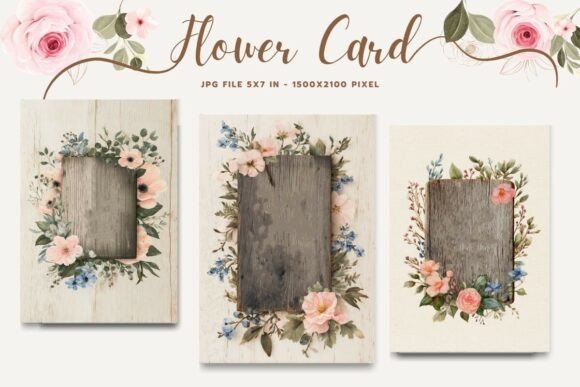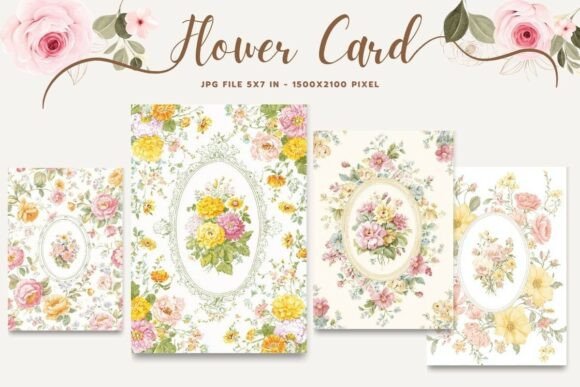
Flower Card Floral Greeting Postcard_27: A Designer's Reality Check
As someone who has spent years turning digital concepts into stitched reality, I know that the difference between a "nice image" and a successful machine embroidery design often comes down to how well you understand the medium before you ever thread your needle. When I first encountered Flower Card Floral Greeting Postcard_27, my initial reaction wasn't just about the pretty flowers; it was about the potential for this specific layout to become a tangible, high-quality product. This isn't just another graphic sitting in a folder; it is a visual asset that demands careful consideration regarding stitch density, fabric choice, and final presentation.
The listing notes that you will receive 4 JPG files of high resolution, which immediately sets the stage for what we are dealing with. Since this is NOT A SVG file or a native digitized pattern, we are looking at a raster image intended to be resized and potentially used as a guide or a base for custom work. For the experienced crafter or small business owner, this distinction is critical. It means Flower Card Floral Greeting Postcard_27 offers incredible flexibility in terms of scaling, but it also places the onus on the user to ensure the visual details translate correctly when transferred to fabric.
First Impressions: Mood, Layout, and Visual Personality
When you look at Flower Card Floral Greeting Postcard_27, the mood is undeniably warm and inviting. The floral theme suggests a connection to nature, springtime, and heartfelt communication. In the world of handmade goods, that emotional connection is everything. The layout feels balanced, likely designed to mimic a traditional greeting card aesthetic, which gives it a familiar, nostalgic charm. However, from a technical standpoint, the shape and detail level are what truly matter.
The design possesses a visual personality that leans towards delicate yet structured. If you are planning to use this for a tote bag design or a sweatshirt embroidery project, the composition needs to hold up against the texture of heavy cotton or canvas. The floral elements appear to have enough definition to stand out, provided they are not over-stitched. The challenge here lies in translating those crisp JPG lines into the organic flow of thread. Unlike vector graphics where lines remain perfect at any size, these high-resolution images require a keen eye to ensure that the curves of the petals and the stems don't get lost in the weave of the fabric.
Real-World Application: From Screen to Stitch
Let's imagine a real scenario. You are an Etsy seller preparing a collection of personalized gifts for the upcoming holiday season. You decide to create a line of embroidered kitchen towels featuring Flower Card Floral Greeting Postcard_27. The goal is to offer a boutique-quality item that customers can use daily while feeling the touch of craftsmanship.
In this context, the versatility of the JPG format becomes a strength. Because you can resize the file to fit the exact substrate, you aren't locked into a pre-set hoop dimension. You could place the floral motif in the center of a tea towel, or perhaps repeat the pattern along the hem. The key to success here is understanding how the design interacts with the fabric texture. On a smooth linen towel, the floral details would pop beautifully, creating a sophisticated look. On a rougher burlap or a textured apron, the same design might lose some of its fine edges unless the stitching technique is adjusted.
This approach works equally well for baby embroidery projects. Imagine a soft onesie or a nursery pillow cover. The gentle nature of the floral theme fits perfectly into a baby's environment. However, because babies' skin is sensitive and their clothes undergo frequent washing, the durability of the design is paramount. Flower Card Floral Greeting Postcard_27 must be executed with care to ensure that the threads do not pill or fray after a few cycles in the wash. The design's inherent simplicity helps here; complex, tiny details are more prone to wear than bold, clean shapes.
Navigating Technical Challenges and Limitations
While the potential is high, there are areas where Flower Card Floral Greeting Postcard_27 requires caution. One of the most common pitfalls for designers is attempting to use a raster-based floral design on curved surfaces like caps or hats without proper adaptation. The curvature of a cap can distort straight lines and alter the perceived symmetry of the flowers. If you are aiming for an embroidered patch or a hat logo, you must test how the resizing affects the aspect ratio.
Furthermore, the density of the design matters immensely. If the original JPG contains dense fill areas, trying to replicate that with fill stitch on a thin fabric could lead to puckering. Similarly, if you attempt to stitch this on dark fabric, the contrast of the thread colors becomes a deciding factor. Without knowing the specific color palette of the thread you plan to use, it is risky to assume the design will read clearly. Light-colored flowers on a black background might look stunning, but if the stitch density is too low, the underlying fabric might show through, ruining the professional finish.
Small hoop sizes present another hurdle. If you try to cram the entire floral arrangement into a 4x4 inch hoop, the individual petals may become indistinguishable blobs of thread. Conversely, leaving too much negative space on a large garment might make the design feel disconnected. The ability to resize is a double-edged sword; it allows for customization but demands precise judgment on where to crop and how to scale.
Impact on Brand Value and Customer Trust
For craft business owners and Etsy sellers, the quality of the finished product directly correlates to customer trust. A poorly executed embroidery project can damage a brand's reputation faster than anything else. Using Flower Card Floral Greeting Postcard_27 effectively can elevate your small shop product line, signaling attention to detail and artistic flair. Customers are willing to pay a premium for items that look professionally made, especially when the design evokes a sense of warmth and care.
The visual appeal of the design contributes to the overall narrative of your brand. If you sell personalized gifts or wedding gifts, this floral motif aligns perfectly with themes of love, growth, and celebration. It adds a layer of sophistication that generic clip art simply cannot achieve. However, this only holds true if the execution is flawless. The transition from a digital preview to a physical object must be seamless. If the final product looks blurry or misaligned, the handmade product loses its value proposition.
Practical Notes for the Design Reviewer
Before you commit to using Flower Card Floral Greeting Postcard_27 in a commercial run, there are several steps you must take. First and foremost, test the design on scrap fabric that matches your final substrate. This allows you to gauge how the thread colors interact with the material and whether the stabilizer choice is adequate to prevent shifting.
You should also review the stitch density carefully. Since this is a JPG and not a native digitized file, you may need to trace the image into a digitizing software to optimize the satin stitch and running stitch paths. Check the small details to ensure they won't collapse under the tension of the machine. It is also wise to test the design in black and white mockups to verify that the contrast levels are sufficient for visibility.
Finally, confirm the licensing terms before selling finished items or using this as a design asset for commercial embroidery projects. While the listing mentions a digital download, the specifics of usage rights for resale can vary. Always check the terms to ensure you are compliant. By treating Flower Card Floral Greeting Postcard_27 with the respect it deserves—through rigorous testing and thoughtful application—you can transform a simple digital image into a cherished piece of wearable art.
In the end, Flower Card Floral Greeting Postcard_27 is more than just a graphic in the Crafts category; it is a starting point for creativity. With the right approach, it can become the centerpiece of your next best-selling item, bridging the gap between digital convenience and the timeless beauty of handcrafted textiles.